Saturday, 21 November 2015

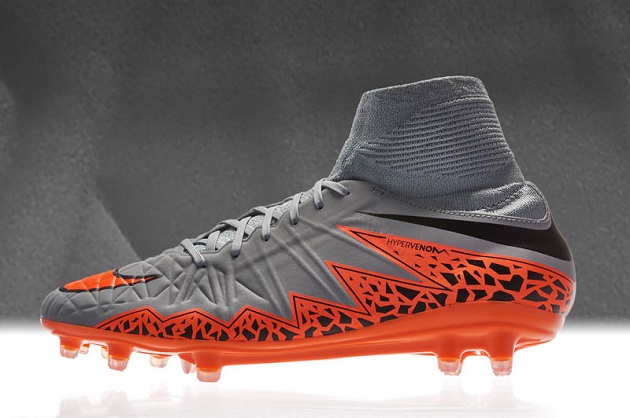
Nike Hypervenom II Tier Breakdown- The Differences


Nike Hypervenom Phantom II

Let’s start off with the top dog. Nike knew they could not be too gung ho when they started fiddling with the hugely successful Hypervenom Phantom I, but the boffins at Nike say they have simply evolved everything that made the original Phantom great into the next generation Phantom. Of course, the biggest difference is the addition of the Dynamic Fit Collar. We have seen it on the Magista Obra and the Superfly II, and the Collar fits over the ankle for a glove-like fit that kinda makes the foot, ankle and lower leg work as one single unit.

This ties in with the Flywire integrated into the upper of the boot. With the Collar locking the foot down, the strategically placed Flywire then ensures your foot does not slide within the boot. The Flywire has a second purpose of creating a better touch on the areas of the boot that are likely to have more action with the ball (which is why it is more heavily concentrated towards the toe). This is the first time Flywire has been used in this manner, and the rest of the upper has been finished off with a mixture of a sophisticated mesh and Nikeskin, as well as the now customary All Conditions Control (ACC). The result is an upper that allows the user to have good, close control of the ball, but it still has a little more padding than the Superfly II.
There is also a slight change made to the soleplate. While the new Hypervenom still features the same split-toe design, stud design and configuration of its predecessor, the soleplate has been made from a slightly softer compound for a more comfortable ride. Plus there is the cool black and orange graphic that makes quite the bold statement. The boot also weighs in at a respectable 209 grams.

Nike Hypervenom Phinish

Sure, we have seen the Phantom II being advertised everywhere, but it is about time the Phinish gets a little more attention. And with good reason too, because the specs of this boot are absolutely fascinating. Essentially the direct successor to the first generation Hypervenom Phantom, the Phinish comes in a traditional low-cut design for a sock-like fit. This fit is accentuated by the super soft one piece upper that is also tongue-less, much like the Mercurial Vapor X.


The upper of the Phinish is made from Nikeskin, Flywire and a mesh material like the Phantom, but they have been mixed in a slightly different manner to offer a more suede-like feel for the ball. However, while the feel of the uppers are a little different in how they are put together, Nike say both boots attempt to offer a more amplified touch in general. Aesthetically, there does not appear to be a huge amount of difference between the two uppers, and given they are essentially made from the same materials, the touch offered by the two boots is probably very similar to each other.
I think what is truly interesting is that bar the Collar, the ever-so-slighty-different upper and the soleplate of the Phinish being a solid orange as opposed to the black and orange of the Phantom, there truly is very little separating the Phantom and the Phinish. Compared to ranges where there are clear differences between the top two boots, the lack of separability between these boots is an interesting move from Nike.

Nike Hypervenom Phatal II DF


So here is something. For the first time, Nike have introduced the Dynamic Fit Collar on a mid-tier boot. Well, it is kind of a mid-tier boot. Priced at about $170, the Phatal II is pretty pricey for a mid-tier boot (there are some top-tier boots that cost the same as the Phatal), but the addition of the Collar is an interesting addition by Nike.
However, this Collar is made from a thicker material than the Flyknit Collar of the Phantom II. The upper is also made from a thick inferior microfibre upper that is on the soft side. Alas, there is no Nikeskin or ACC used in the construction of the Hypervenom Phatal II DF, so while you get that Dynamic Fit Collar, it will not feel the same as putting on the Phantom II as you do not have the more flexible Flyknit collar.
Besides that, the soleplate and stud configuration of the Phatal II is the same as the Phantom and Phinish models. Nike do offer a standard low-cut Phatal II that has the same features as the Phatal II DF minus the Dynamic Fit Collar for $130, making it a much more affordable option. The Phatal II DF is good for those of you who want to try the midcut range of Nike boots, but do not expect it to give the same ride as the standard Nike Dynamic Fit Collar boots.

Nike Zoom Soldier IX


Traction – The traction, to put it simply, is beastly. When I test shoes, I will always start indoors then move outdoors to finish things off so that the traction’s integrity isn’t compromised by going back and fourth. However, I did the exact opposite with these and there was really no change between indoor and outdoor no matter how much I  wore them on the asphalt. Their traction is just really solid, and possibly some of the best I’ve had this year. Actually… I will go out on a limb and say confidently that these have had the best traction I’ve used so far in 2015. Yeah… they were that good.

 Cushion – I have’t really enjoyed the cushion from the Soldier models that released after the Soldier 6. They’ve been pretty lackluster and firm whereas the 6 was super comfortable. Luckily they finally decided to give us something closer to the 6 than before which made these really enjoyable from a cushion standpoint. I wish I could tell you what type of Zoom Air units were implemented within the midsole, but I couldn’t remove the insole to check and see. Just know that there is Zoom located in the heel and forefoot, and I believe they are pretty thick, you can feel them, and they’re awesome.

Materials – The entire upper is one piece, and it’s comprised of mesh, nylon and a little bit of Fuse. The only thing I dislike about the materials is that the tongue or opening of the shoe doesn’t stretch at all so getting them on is pain. Other than that I thought they were great. No pinching or hot-spots occurred while wearing them – no matter the type of sock I wore. Mesh isn’t extremely durable, so that might be considered a negative to some, but it creates a shoe that requires no break-in time and moves with the foot perfectly – and that helps create the feeling of wearing something that is one with the foot instead of something that the foot must adapt to wearing.

Fit – They fit true to size, and lockdown is the shoes greatest feature. In fact, my local House of Hoops only had a size 9.5 in stock (I prefer to wear a size 9), and the tiny bit of dead space within the shoe didn’t even bother me because once I strapped the shoe up my feet weren’t going anywhere. Nowhere.
The heel strap locks the heel into the shoe so perfectly that the only sneaker I could compare them to were the Ektio models. It’s attached to the shoes heel counter so the entire heel and ankle collar section of the shoe are pretty much one solid piece when all things are said and done.
Then there is the forefoot strap… this one is the game changer. This strap locks the foot into the shoe across the medial side of the forefoot first. Then it comes across the midfoot to lock that area into place. That portion of the strap is connected to the Flywire which is then activated once you pull to tighten – locking in the lateral side of the forefoot. Yeah. awesome! 


Support – As we all know, the support relies heavily on the shoes fit. And in case you couldn’t tell from the fit section, support is pretty. Damn. Beastly. You’re foot is literally supported at all points, at all times. Medial forefoot support? Check. Lateral forefoot support? Check. Heel support? Check. Midfoot support? Check. Yeah… Nike may as well have named these things the Nike Zoom Hakuna Matata. Once you have them strapped up, you’ll have no worries.

Overall – I’ve been liking Nike’s lower end models a whole lot more as of late when comparing them to their more expensive signature counterparts. I don’t know what it is, but they’re just shoes that offer you more bang for your buck. No, you probably won’t see LeBron wearing them on-court anytime soon, but they’ll take care of you on-court either way. Great traction, solid cushion, lockdown better than most shoes you’ll find on shelves right now which translates into some of the best support you’ll find. All of this without restricting any movement or making you feel as if you’re carrying extra weight with you. I really enjoyed playing in the LeBron 12, but I’d take these over them any day of the week. Unless I’m going to the mall… then I’d bust out the LeBron 12’s. Because these things are hideous.

Thursday, 12 November 2015

Nike Mercurial SuperFly IV


With the introduction of Flyknit to soccer equipment, the world truly seemed to have entered into a new era of possibilities. An absolutely amazing creation, Flyknit has a stretch to create a flawless fit while having the structure necessary to be used on an area that needs so much support while still allowing free movement. Enter Nike’s Magista Obra and the mercurial Super Fly IV: two boots that have turned the boot world on its head. While the review for the Obra came from the expert down-under, I have been handed the task of (somehow) describing the SuperFly IV. Has Nike been able to blend Flyknit and a revived boot legend to make an amazing boot?
THE LOOK

With several colorways on the market, Nike has made sure that the SuperFly will appeal to any sensibility. A blackout version for the more conservative boot enthusiasts, and the pink launch/electric green SE/laser orange SuperFly for those that like a bit more “pop” from their boots. The huge “NIKE” emblem from the Vapor IX has gone by the wayside and we have gotten back to simply two Nike Swoosh symbols on the boot. All of the releases so far look great, but there will definitely be a colorway that meets your standards.
The biggest change in the look will be the,  that extends up to the ankle. Admittedly, certain colors will look odd mixed with certain socks, but the collar is an unmissable addition when looking at these boots. Albeit it more of a conversation starter than an attractive addition, it gives no doubt (even from across the pitch) which boots you are wearing. If you do not like drawing attention to your feet, these boots are not for you.
THE TOUCH

The most daunting task of this review: actually explaining what it is like to use the SFIV. The newest SuperFly is the closest thing to wearing a second-skin that you can have. While other boots might have thinner uppers, the way that the Flyknit conforms to your foot immediately upon placing your foot in the boot is unmatched outside of the current Flyknit options. While the previous statement may have some running back to their worries about differentiating the SF and the Obra, the similarities stop fairly quickly. The SF is one layer of the Flyknit with a uniform thickness throughout the entirety of the boot. No added padding and the same material spread everywhere across your foot brings an amazing touch to your time on the ball. While protection is sacrificed in the name of close touch, the trade-off feels worth it after getting used to the SF.

No shooting elements or grippy textures means that every strike, pass, or movement with the ball feels extremely pure. While most boots that brag about a “barefoot feel” tend to do so because of the thin nature of the upper, the SF pulls this off through a combo of a thin upper and an unmatched ability to wrap around your foot. Despite not being a huge fan of boots typically tossed into the “speed” category, I fell in love with the SFIV. Where the Vapor X felt very sticky upon the first few wears, the SuperFly allows the ball to move against the upper without getting stuck under your feet easily.
Striking with the SF has a noticeable zip to it as the ball quickly flies off of your foot. With no extra padding or shooting elements, you feel the ball as it pings away from your foot. Bringing the ball out of the air or passing also provides immediate response and, with the thin nature of the laces, is meant to be as close to a perfect experience as soccer boots can currently provide. Considering what Nike was hoping to achieve with this boot, it seems difficult to imagine them releasing something better than this on the first go around. When you have the laces tight and get secure inside the SuperFly, nothing out there is comparable on the market.
THE FEEL

The one negative area for me with the SuperFly IV and one area where I would advise caution is the break-in. Despite the boot having two different consistencies of Flyknit to form tightly to your foot (stretchy around the top/lace-area of your foot to allow stretch for different foot sizes and tight everywhere else to let the laces do their work), the heel lining caused some big-time blisters. Made from a smooth rubbery material, this boot is best broken-in in spurts instead of long sessions. Having tested a few pairs already to help me with this review, playing in them until you feel possible blisters warming up is the best way to go. The initial SF saw me wearing them for long training sessions right away, and I have never had heel blisters as big. However, once this boot is broken-in, it fits like a dream.
In regards to the dynamic fit collar, it takes a bit of getting used to. However, the experience is an enjoyable one once the initial odd feeling wears off. While I would never imply that a good fitting boot without the collar does not fit well, the SF has an extra level of integration with your foot/leg that aids the fit and the experience. While the collar does not provide any real extra protection, the sensation of a seamless transition from the area of your leg outside the boot to the area inside is astounding. While not for everyone, this set-up will make believers out of many skeptical wearers.
The soleplate on the SuperFly sees a return to carbon-fibre, but the stiffness of past SF’s has definitely been shelved. The dual studs in the heel have also been replaced by a four stud set-up, while the forefoot studs hearken back to early Mercurial boots instead of more recent ventures. In harder pitches and even a few soggy ones, there was no slippage and the set-up allows you confidence on your feet while providing great traction and push-off for any type of movement your game requires. Couple the studs with the locked-in sensation from the Brio cables in the upper and you will experience great movement on any firm ground pitch. As with any FG boot, the SF in this stud set-up is not made for artificial surfaces. However, Nike have made sure that their latest innovation is available in any stud pattern you may need, so shop accordingly.
THE VERDICT – WHO’S WEARING IT – BANG FOR YOUR BUCK

While no other boot in the world may split opinion like the SuperFly, I have quickly found myself returning to Nike’s current headline boot. Even with a few blisters along the way, the quality of the boot shines through after the break-in and will have me proclaiming its success from the mountaintops. If you have the opportunity to shift into this boot, you will definitely find it is an experience unlike any other. If all the information above appeals to you, then the experience should be glorious. While Nike makes sure to keep their premier athletes in their premier boots, we would be remiss to not mention that these beauties are worn by CR7 himself, Alexis Sanchez, and a host of other professionals at the highest level.


Li-Ning Way of Wade 3


Traction – They fixed the hell out of the traction. The Way of Wade 1 had okay traction, Way of
 Wade 2 had okay traction… but the Way of Wade 3… awesome traction. Half of me wants to 
 credit the traditional herringbone pattern to the great traction, but the other half of me wants to credit the rubber compound. It’s probably both that attributed to the increased traction, so maybe my 50/50 thing is pretty spot on. Whether I was at the disgusting 24 Hour Fitness court or the pristine High School courts, I was pretty much covered. I was unable to play in these outdoors because of the weather, so I apologize about that. Just based on an assumption, the rubber feels strong enough to last outdoors, but I can’t tell you if they gripped the blacktop well.

 Cushion – Li-Ning utilized a 4 layered cushion system. The rubber outsole, The Cloud midsole, Carbon Fiber plate and the Phylon midsole with Bounse & Cushion in the heel and forefoot. As for how they felt or played… meh…
I’m not a fan of Li-Ning’s Cloud cushion. It feels nice in hand, but there is no rebound or bounce to it. It just feels lackluster and firm. I do like their Bounse and Cushion systems, but they were super thin due to the 4 layered construction. If they would have layered both midsoles together in a normal midsole height, I’d have gained about an inch or two in height… which I wouldn’t have minded too much, but it would have caused some instability.


 Materials – No real surprise here, the materials are fantastic. Poor execution when it comes to overall design, but the craftsmanship and material quality are top notch.
Fit – The fit was excruciating… every time. Some areas broke-in, but other areas did not. Pinky toes… I’m so, so, sorry. Arches… I know you hate me right now… but I promise, I’ll never put you through that again… at least not in this particular shoe.
Seriously though… what the hell?!? Did anyone wear-test these things before they went into production? I highly doubt it. The lacing system made for a very sloppy fit, and the midsole/ Carbon Fiber peaks really killed my feet. I don’t know how Wade is wearing these things comfortably on-court. Maybe from a linear standpoint, they were decent, but moving laterally at all was a not so fun experience.


Support – There are your typical support features in place. The outrigger & the Carbon Fiber plate worked as they are supposed to, but the fit is what will allow it all to work together. You can’t have pieces like this and not have them work in tandem. The greatest thing about support features on footwear is when you don’t ever notice them. Unfortunately, that isn’t the case here.

Overall – I was initially excited, then quickly disappointed… then in a lot of pain. The fit was really bad, and they hurt like hell. Traction was a definite upgrade while the cushion was a downgrade. Materials are great, as they usually are, but that won’t save these from being a poor performer. I haven’t played in a shoe that I would consider a truly bad performance model since the Reebok ZigTech… until now.